Saturday, February 13, 2016

Smashed Great Sphinx

Medieval Arab writers, including al-Maqrīzī, call the Sphinx “balhib” and “bilhaw”, which suggest a Coptic influence. The modern Egyptian Arabic name is أبو الهول (Abū al Hūl. In English – The Terrifying One.
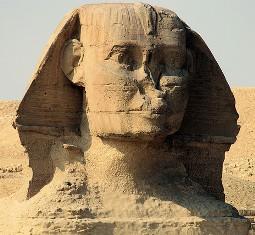
El-Macrisi (al-Maqrīzī), in XIV century reports about a man with a name Saim-el-Dahr, who gone to the pyramids with intention "to repair some religious mistakes" and had smashed the face of the Abul-Hol. After that, the sands engulfed the fertile soil of the Egypt, and the people refer this to the violation over the Abul-Hol.
Traditional explanation is that Quran does not permits human portraits. But this syllogism does not explain why such intervention was done only with Great Sphinx and not with many male statues in Egypt!? And with many other smaller sphinxes?! The things come into places when we accept that the statue is believed to be female, and this is already too! As orthodox worshiper, Dahr was obliged to repair the religious mistakes.
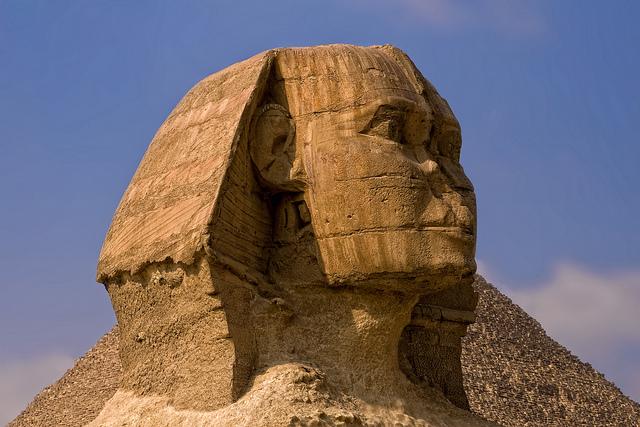
Now, viewed from a distance when the day is plenty of lighting, Sphinx is seen as girl with light kind of “burqa”, traditional for the Muslim women.
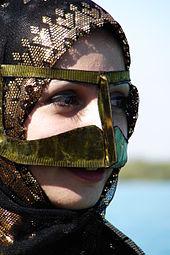

Traditional Bandari  burqa costume of southern Iran.   

An woman wearing a niqab in the United Arab Emirates    


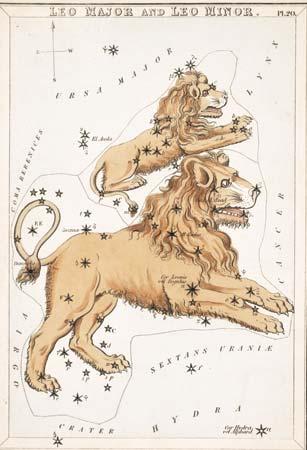
Whether the Great Sphinx is peering at Leo constellation

Many authors outlined that the Great Sphinx is peering at the Constellation Leo.
The Hermetic axiom "as above, so below" is the supreme principle governing the belief system and practices of the occult in our days. In ancient times, it was widespread and everyday attitude. So many argue that complex in Giza is in special connection with constellation Leo. Whether this is exactly true or not, the constellation seems to be important for the ancient Egyptians.

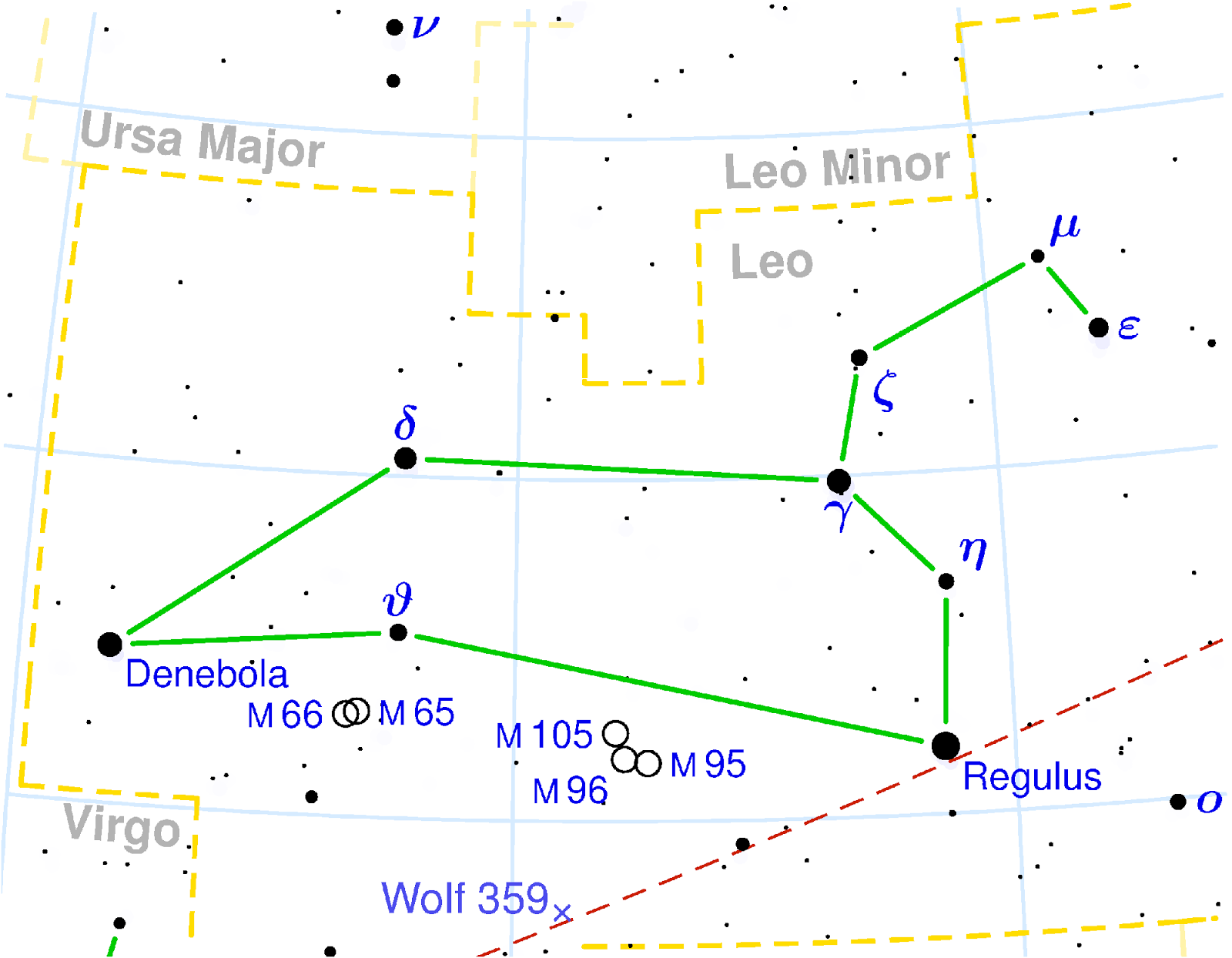
Above: Two kinds of mapping Leo constellation


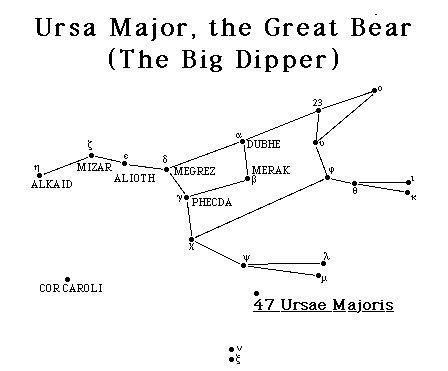
Great Bear constellation with one of historical names.

Close and broad drawing.

It is sure only that The Great is peering toward proper constellation.
However, whether it is exactly Leo constellation?
If it is Leo for us, it is not obligatory to be the same for Egyptians, especially for ancient. First should to point, the constellation’s names are not constant neither in the time nor in the place.
For example, constellation Ursa Major (Great bear) was called “ladle” or “dipper” in the medieval ages, which is very close to its form traced by bright stars. Then the same constellation was called “horse cart”, which also is closer to its natural form than “bear”. Through centuries and regions, the constellation had more names.
Many constellations were renamed many times, frequently by religious causes, as it is the case with constellation “Virgo”.
The astonishing stories about history of sky toponymy are narrated in the books of French astronomer Camille Flammarion.
Second: It is of benefit to point that the forms of the constellations Lion and Great Bear do not match up to the now time names.
Leo has not illustrious tail, without which the lion is not a lion. In second drawing above, the Leo has tail, but it is more horse than lion. In any way, the shape of the constellation does not replicate the name.
With the Great Bear, the situation is ridiculous. The bear has big tail – as the giant mouse. In addition, its shape formed of pure stars, without implied pictures, is forming something more like to lion than the bear. Lion rampant is corresponding to this constellation.
Third: Leo and Leo Minor (Small Leo) are very close – as the child to mother. Ursa Major and Leo Minor are very close, as the father and child.
Ursa Major and Leo are very close, too. They have common boundaries.
All three – Leo, Great Bear, Small Leo – are close as the family.
However, you will never see three constellations pictured together – only two by two.
This surveillance is right especially for the medieval centuries, when the religions were dominant.
Observation is interesting, because three objects are forming solid group in the sky.
Why? From where is this tradition to divorce Leo and Ursa? On the ground of writing or in the ground of censorship is thriving this tradition?
Fourth: In the Egypt land, have not bears. This is monster known for the ancient Egyptians by the trade import. In the same time, the lions are common beasts in the area.
Let us gather visible facts:
- Three constellations are very close each other as family.
- The top constellation likes mostly to the lion.
- The bottom constellation likes mostly to the lioness.
- The middle constellation likes mostly to the cab, and is named Small lion.
- The bear is not innate specie for the Egypt’s land, but the lion is.
I suppose that old Egyptians accepted Ursa Major as Lion. Contemporary Leo was accepted as Lioness. In addition, between them unsurprisingly is sitting cub.
The difference is not so big at first side.
But! If the constellation at which is gazing The Great is Lioness, then this is
tipping to female origin of the Sphinx.


Above: Ursa major and Leo minor are very close. As are father and child.
Left: Leo and Leo minor are very close.
As are mother and child.


Left down:
Ursa major, Leo Minor and Leo are all three very close, but never are pictured in one map! Still in the maps with free space.

Three constellations on the North sky.
Center below corner
Expanded view

Friday, February 12, 2016

Begin of Egyptian Religion

When the Egyptian society, in the dawn of his formation, initially faced to the unexplainable forces, the first impulse was to name every of them and pay attention to all. Naturally, the designation depended of three characteristics:
The place where the event was reached. At now times, this is very proper to the shamans in Mongolia, but should be seen in every primitive religion. The calming power souls of the places are main part of shaman’s work and people’s rituals and duties.
The time when the event was reached. Very frequently seen in solar religions, where the rituals are connected to the number of sun cycles – such as sunrise and sunset every day. In most solar religions, the beginning of the year is settled in the end of September or the end of March – the moments of the equinoxes. Many of rituals and believes are connected to Moon cycle.
The character and sense demonstrated of the events. Here are arriving big rows of deities and souls, as the natural events are uncountable in the number. They should be silent and furious, profitable and losing, good and bad, female and male …
Many places, many moments, many events – indescribable number of Deities.
Probably thus began Egyptian religion, too.
Then, as every human activity, religion suffered development and improvement. Very soon, the people spotted that many of events possess some common features. The society arrived to deeper understanding and created second level of Gods who acquired some universalism, abstract dimensions, and foundation level of absolutism. In this point were introduced notions as incarnation and manifestation. With their help, the multitude of the Deities was reduced to smaller herd of Gods.
Evolution has not limits. Very soon, Egyptians arrived to the third level of understanding and explanation of the world around them. From the experience through logic were extracted principles. With exact definition, based on sufficient practice and strong deliberation, the explicit principles became very few. The religion appeared as philosophy. The Gods acquired abstract dimension and sense.
From this point to monotheism is very close. It is innate step to imagine The God – single personification incorporated into Hi/Her all principles.
The monotheism was somehow mandatory step of maturity of Egyptian religion.
In this point, religion finished its maturity. The ways for progress was limited and all of them aesthetic and ornamental. Development with no improvement.
This is not a problem – fully formed religion works enough smooth and fulfills every need of the persons, people, and society.
At now time, the religions of China and Japan represent this stage of mature convictions.
They are formed more than 4000 years ago. They incorporate into them Buddha, Confucius, Jesus Christ, still Holy Quran! Nevertheless, in every case their base is not in tremor. Moreover, remains strong maintain of moral, traditions, health society.
This picture should be very simple and stable in the case here was only religion. However, this was not the case – here were also Power and Church.
The Power is tending to the monotheism, but on the other ground. The single God, the monotheistic hierarchy are invited to strength the roots of the Power. The supreme ruler is willing to be presented as representative to the absolute God. This makes his statute absolute and eternal.
The Church in his row is tending to polytheism.
The problem is that single God was universal and principal. His rules were not so big number. If everybody keeps them, the human life could be safe and understandable. No need from Church, no need from rituals, no need from envoys, delegates, spokespersons.
If we accept universal God, we must accept also that he is everywhere in every moment. No need to go to the temple and hire a monk to communicate with the God. We can communicate with Hi/She everywhere directly. It is enough to listen and attempt to understand His/ Hers messages.
If we accept the God as principal, then we are obliged to reject possibility Hi/She to act in favor of single person. In this way, should be disturbed order of many other persons. Before the principal, all persons possess equal values. At the end – no need from Church.
Thus, Monotheism is in controversy with idea and practice of the Church.
Therefore is arriving tendency toward polytheism to be keeping long time.
Many Deities, many rituals and duties, big clergy.
As a result, the Church and Power reached common point in need to change ground over monotheism and the level of monotheism.
In the same time, rests disruption between them due Church’s need of polytheism and Power’s need of monotheism.
This was immanent dichotomy in relations Church/Power in Egypt.
In some cases, Church caught the Power on the ground of authority.
In some cases, war makers through war activities acquired the Power.
In some cases aside, persons or intercalations with economic management gained the Power.
At the end, every Power reached need of Clergy.
At the same point, every Church reached need of Power, too.
When those needs become stable and consistent, spontaneously arrived amalgamation and merging between Power and Church.
This was nutrient medium for religious reforms.
Some of steps remained in folklore of the candid unschooled people. The state and power gone, the Temples fall into ruins, but several fragments still survived until our days as relicts. Some of them in the countries far away from Egypt – Georgia, Russia, Bulgaria, Greece – for example.
Such relicts, frequently as roots for words help to recover some parts of ancient notions.
At the beginning, all unknown and respecting natural forces were divided to two main categories – benevolent and hostile to humans. We can derive from commented above relicts with great suspicion but with enough authenticity that the primeval forces (respectively representing gods) were named with “Hu” root for compassionate and with “Fu” root for antagonistic forces.
At the next step, roots Hu and Fu stand for symbols of the principles – creativeness and destroying, caressing and punishing father's right hand of the God.
Simply said – God Spirit, who judges to every as one deserves.
Then, in the nature was spotted important feature – every act, nevertheless of consecutions for the humanity, needed energy, which manifestations were the Sun and light. Thus, energy was recognized as basic dimension of the events. This dimension was denoted with root “Ra”. When add Energy to the old two forces, they are receiving form of truly acting forces – as the God Father who not only adjudicates, but also imposes decisions with vigor.
Thus, HuFu was invited to play role as God Spirit.
On the same ground HuFuRa – God Father.
It rests to find God Son. The Men-Ka-Ra – Human Soul of Ra – is assignable to this role.
The need of reform was fierce with aim to strength power. In addition, after four dynasties, the kings were able to enforce new cult.
At now time, we are unable to say what exactly contained the reform. The monuments are scarce. The problem is not in the focus of scholars. There is applicable only rough extrapolation. The pieces rest to be gathered and systemized.
We should suppose that the stress moved from favorable /unfavorable to human forces dualism to monotheistic essence of power – the energy/force. In other words, from Hu-Fu to Ra. Meanwhile, kings had bear in mind the inertness of human believes and the influence of clergy. By these causes they do not rejected old cult, but incorporated new one to older, giving them equal quantity. The only sign for this should be interpreted approximately equal elevation of the two main pyramids in Giza. Reform was proven stable and long lasting, may be due to the compromise.
Next Reform may be was made from Amenhotep II. He was the son of Tuthmosis III, with whom he may had served a short co-regency of about two years. Tuthmosis III believed to be victim due to the reign of Hatshepsut. Hatshepsut, the fifth ruler of the 18th Dynasty, was the daughter of Thutmose I and Queen Ahmose. As was common in royal families, she married her half-brother, Thutmose II, who had a son, Thutmose III, by a minor wife. When Thutmose II died in 1479 B.C. his son, Thutmose III, was appointed heir. However, Hatshepsut was appointed regent due to the boy's young age. They ruled jointly until 1473 when she declared herself pharaoh. Dressed in men’s attire, Hatshepsut administered affairs of the nation, with the full support of the high priest of Amun, Hapuseneb and other officials. When she built her magnificent temple at Deir el Bahari in Thebes, she made reliefs of her divine birth as the daughter of Amun. Hatshepsut disappeared in 1458 B.C. when Thutmose III, wishing to reclaim the throne, led a revolt. Thutmose had her shrines, statues and reliefs mutilated. For the Tuthmosis III there had only hate. His long lasting rule was filled with crowded activities. Buildings, war enterprises, channels restorations … He was satisfied to remove the obstacle Hatshepsut, and has not neither time nor attention to the principle questions.
For the Prince Amenhotep II, who lived protractedly in the shade of his great father, rested enough time to reconsider customary law of the old Egypt and potential dangers for the his step kings. May be here was nursed from childhood abhorrence toward women rulers like Hatshepsut. May be was only cold common sense judgment … Who knows!
However, he opposes the previously remediated religious right to customary law.
Until Amenhotep II, stepping the power through female chain was common practice. There had some women pharaohs such as Meryt-Neith (1st Dynasty c.3000 BC),
Nitocris (Sixth Dynasty 2148-44 BC), Sobeknofru (Neferusobek) (12th Dynasty 1767-1759 BC)
Still Sneferu gained power trough rights of his mother Hetep-Heres.
After Amenhotep II, women were only bright jewelry in the crown of their husbands as Nefertiti did. The Cleopatra is not true example, because she ruled in the frames of Macedonian dynasty.